



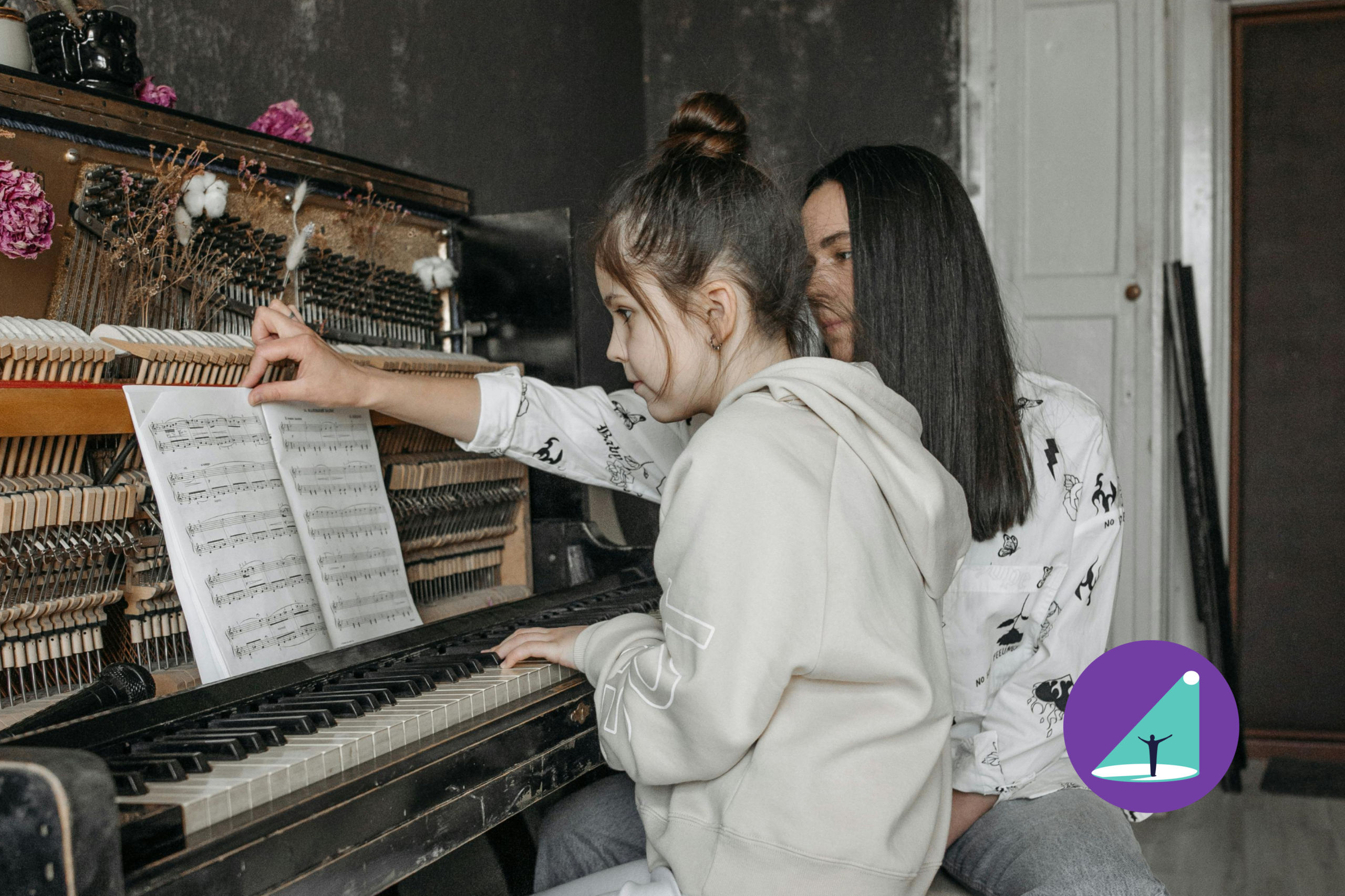
Introduction – Why is the right goal-setting so important in learning piano
The question is: how to properly build the learning process? It is faced by everyone who begins to master the piano. The answer lies, hidden, in one of the most important components—goal-setting. Without clear understanding of where to move, even the most regular practices risk turning into a meaningless routine. Turning finger movements into real music, giving confidence and inspiring continuation—it is exactly skillful goals that do this. piano goals, goal setting, accountability, milestone rewards support planning clarity, consistency, and a progress dashboard within a modern app piano learning flow that strengthens goal planning, accountability tools, and a reminder system.
Specificity and realism are the basis of tasks serving as a kind of compass not to get lost in the sea of notes and chords. Not just items on the list, the goals are actually the very foundation of motivation and awareness of personal progress. And there is no coincidence that music teaching experts emphasize the importance of thoughtful planning: in its absence, development can be slowed down, and interest extinguished.
How to Determine Personal Ability and Level for Competent Planning
The first step to successful learning is determining the starting point. This enables building the plan on the principle of “realistically achievable”, which cannot be done without honest self-assessment here.
- Present skills analysis: Can simple scales be played confidently? How is the sense of rhythm developing? Knowing this will give an indication of what the true level may be.
- Identification of strengths and weaknesses. Perhaps the fingers are not flexible enough, but the musical hearing is well-developed, this will show the directions to accentuate in training.
- Determining time resources. How many minutes per day can be devoted to practice? In relation to these, the planning should be done, taking into account the workload.
- Emotional readiness assessment. No less important is the desire and readiness to overcome difficulties: motivation is the engine of progress.
For clarity, here is an example table that helps in structuring self-analysis:
| Criteria | Rating (1-5) | Comments |
| Technical level | 2 | Learning to play scales |
| Sense of rhythm | 3 | Sometimes loses tempo |
| Musical memory | 4 | Easy to memorize melodies |
| Practice time (minutes) | 30 | Able to practice regularly |
| Motivation and attitude | 5 | Very interested in learning |
Such an approach allows the teacher to create a realistic and personalized learning plan, where every step is an achievable and motivating goal. In fact, it is on this that effective piano playing skills development and further progress is based, aided by target reminders, habit formation, and milestone tracking.
The SMART Approach to Goal-Setting in Piano Learning – Adaptation
It is of special significance to set goals in piano playing education if a proven SMART template is applied. This method helps to structure desires, turning them into clear tasks and smoothing the path to success. Let us consider precisely what each letter means and how it can be applied in the piano context:
- S – Specific. The goal should be clearly formulated. Instead of an abstract “learn to play better,” it’s better to outline the goal “practice the scales to a speed of 80 beats per minute.” Immediately, you will see what exactly you want to achieve.
- M – Measurable. The progress should be assessment-applicable. The speed of performance can be measured, or, for instance, the number of learned pieces, or quality of technique. For example, the goal “learn 3 pieces of different styles in a month” allows objective tracking of success.
- A – Achievable. This simply means the goals are realistic and should be tailored to the level of the student. Setting very hard tasks that the child is not yet ready to accomplish is a sure way to court disappointment.
- R – Relevant. The goal should be important to you personally. It is not worth chasing ideals of others, so motivate yourself with something that really inspires you to play the piano.
- T – Time-bound. Clearly defined due dates, specified. For example, “master chord transitions in Bach’s étude within 2 weeks” will keep the rhythm of working well without delays.
You create a roadmap for the application of the SMART approach, which guides and consolidates results, makes lessons more effective, and conscious. goal setting works best when paired with accountability tools, a reminder system, and motivation boosters for continuous growth.
Moral of the story: structured goals plus self-discipline equal consistency.
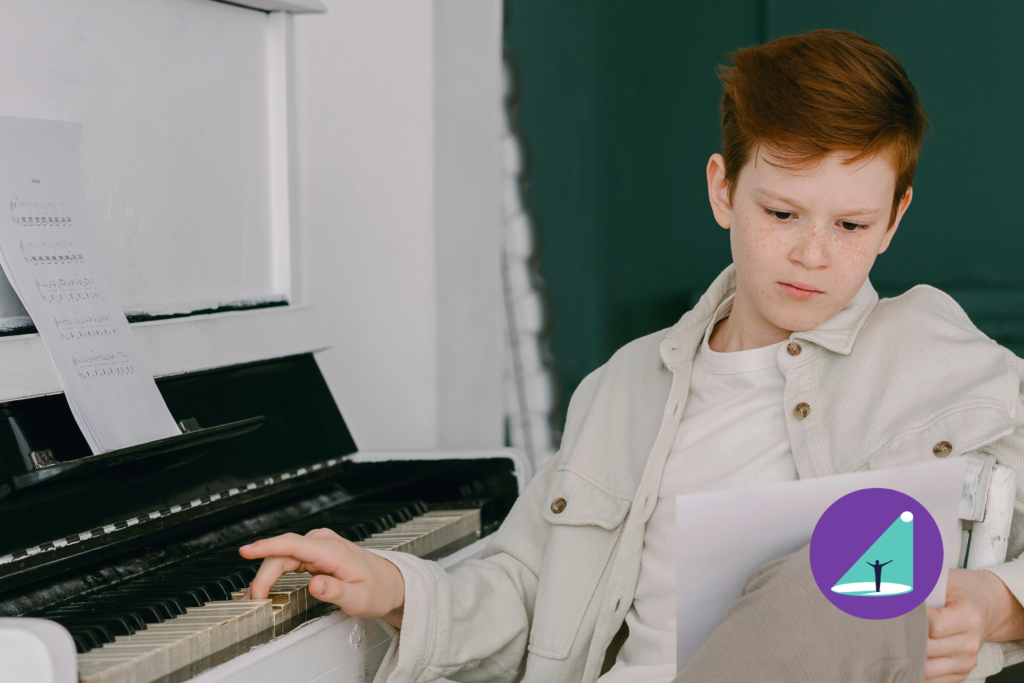
Common Goal-Setting Mistakes and How to Avoid Them
Mistakes in the beginning of the journey to mastery in music undermine motivation and hold back progress. Understanding the most frequent missteps will enable the learner to avoid common traps.
- Too general goals. “I want to play better” is the loss of direction and clarity without specifics. With no clear guideline, it is very easy to get lost during practice.
- Overestimating one’s capabilities. The desire to master the most complicated compositions right from the very beginning brings on disappointment. There is a false feeling of failure, though the problem is only in the choice of the task.
- Lack of limits regarding time. Without deadlines, the risk of endless procrastination and postponement arises.
- Not taking motivation into account. Goals that don’t interest or inspire fade quickly and are perceived as obligations rather than pleasures.
- Focusing only on the results. An exclusive focus on the end goal sometimes prevents enjoyment of the process and the assimilation of basic skills.
To avoid these mistakes, useful it is:
- Setting goals as concretely and realistically as possible.
- To break large tasks into small, achievable steps.
- To implement realistic deadlines. Practice regularly to develop an emotional relationship with music and motivate oneself through successes.
- Have regular opportunities for reflection and adjustment of goals.
Turn this into a sequential, orderly process of inspiration rather than chaos, and an effective, professional approach to goal-setting will be developed for piano learning—in particular at early and intermediate stages. Here piano goals remain visible via a progress dashboard, planning clarity, and reward incentives.
Stages of Achieving Goals – From Simple Exercises to Complex Pieces
Not by a leap but by gradual and conscious movement can one reach piano mastery. Because it is not worth rushing to virtuosic pieces, starting with the basics should be done gradually, step by step. These are the key stages which will help structure learning:
- Initial phase: basic techniques and exercises
With the keyboard, one gets to know proper posture and hand positioning. Simple scales, arpeggios, and coordination development exercises are the basis of all further work. - Intermediate stage: repertoire and technique acquisition
Transitions to studying simple musical works that include various rhythms and dynamic shades happen. Here it would be important to solidify note-reading skills and develop a musical sense. - Advanced level – complex works and expression
Working through the technical details of demanding pieces, paying attention to the nuances in performance and individuality of style, he is even able to improvise—the pianist already shows expressive flair in his music.
Each of these steps in itself requires time and patience. One cannot bypass basic exercises, because a good foundation is laid with them. It is worth breaking up every goal into smaller subtasks in order to keep motivation going and see personal progress. Milestone tracking and performance review keep the journey measurable.
The Role of Feedback and Motivation in Pianist Progress
Without analysis of the results, effective practice is difficult. Feedback is integral to the training of pianists and allows mistakes to be rectified and techniques improved, which is precisely why it is so important.
- Allows weaknesses to be seen and efforts directed toward their elimination.
- Reinforces knowledge on musical aspects: rhythm, tempo, and dynamics.
- Helps avoid stagnation and inactivity in the absence of progress.
Motivation, in turn, is the fuel for daily practice. It can manifest in everything: from the desire to play your favorite melody to the ambition to perform in a concert. For keeping a high level of motivation, it is useful:
- To set realizable intermediate goals.
- Marking and celebrating personal achievements.
- Using support from a teacher or musical community.
- Include a more game-like methodology in order to make the sessions more interesting and diverse.
Quality feedback, together with steady motivation, will build a solid foundation for success in mastering piano playing. Only this way will the learning process be not only effective but also inspiring. accountability with target reminders and reward incentives strengthens consistency.

How the Talented Platform Helps to Set and Systematically Achieve Musical Goals
And this is the task: allowing the pianist at any level not only to dream but to achieve progress step by step. The approach is based on systematic support throughout the process—from goal setting to the analysis of results and adjusting the plan.
Here are the main ways in which the platform supports you on the path to musical goals:
- Personalized recommendations.
An adaptive algorithm at the heart of our system takes into consideration all of the current level, genre preferences, and your real capabilities. You get just those exercises and repertoire that best fit your goals and learning stage, rather than fixed templates. This means no “overloads” and disappointments. - SMART structure for every goal.
We break down your tasks into specific, measurable, achievable, relevant, and time-bound steps. The application helps to formulize the goal itself, thanks to a balance between ambition and realism. Such an approach motivates and allows tracking progress step by step. - Detailed statistics and progress visualization.
Extremely important is to see your achievements. In our application, a clear picture is given about how much time was devoted to practice, what techniques have been mastered, and what pieces are performance-ready. Charts, diagrams, and daily reports help with staying motivated and understanding where extra attention is needed. - Interactive feedback.
The system allows recording practice sessions and getting recommendations for improving the technique automatically. You will always be aware of mistakes or how to make your performance more expressive, which is indispensable for self-study. - Gamification and community support.
It helps to maintain interest and regularity in practice by turning achievements into rewards, and adds a spirit of competition and support through participation in challenges and sharing successes with other musicians.
Acting not as a tutor with dictatorial demands but as a personal assistant, the platform structures the process and suggests the next steps. Thus, it greatly increases the chances for systematic and harmonious skill growth at the piano and allows making the path to mastery not only productive but inspiring as well. Here the Talented app embeds goal setting, accountability tools, and motivation boosters with milestone rewards to sustain continuous growth.
Conclusion – Synergy of Proper Goals and Modern Learning Tools
Success in modern piano learning depends directly on the ability to correctly formulate goals and effectively organize their achievement. Proper goal setting provides a solid base, while the path of mastery is clearer and more controlled with the help of modern digital tools such as Talented.
Talented transforms abstract dreams into real, reachable stages, thanks to its clear planning system, feedback, and motivational mechanisms. That means even the most challenging musical heights turn out to be more accessible when approached step by step. It is not talent or hard work that makes one successful with the piano but a combination of correctly set goals, a systematic approach, and state-of-the-art technologies that back up every step on the way to mastery. Use Talented as a reliable assistant, and your musical ambitions will become a reality. In practice, the Talented app aligns goal setting with accountability and milestone rewards, supported by structured goals, performance review, and motivation boosters for consistency.